 Free Standard Shipping
 Pay Later with Klarna
 30-Day Easy Returns
 Good Housekeeping Award Winner




The UK's best family beaches are genuinely world-class, but only if you know where to go and what to bring. Most families find out the hard way. Someone forgot the sun cream. The kids are too hot. The sandwiches have gone soggy and there's nowhere to sit in the shade. By 2pm everyone's tired, grumpy and heading back to the car.
This guide covers five of the best family beaches in the UK, from the wide
golden sands of North Devon to the almost-impossibly-turquoise waters of the
Outer Hebrides. We've also pulled in some practical kit suggestions, so the
next beach day doesn't end at 2pm.
1. Holkham Beach, Norfolk

Holkham is the kind of beach that makes you forget you’re in England. At low tide, the sand stretches for what feels like miles, backed by a canopy of Scots pines that belong in a fairy tale. It regularly tops lists of the UK’s best beaches and for good reason: there’s space for everyone, the water is calmer than the Atlantic-facing coasts and the dunes give kids something to explore.
It's managed by the Holkham Estate, so facilities are well-kept and parking is reliable. Dogs are welcome in certain areas, which matters to plenty of families who have a four-legged member. The flat expanse is ideal for younger children. There’s room to build a windbreak or set up a little base without feeling like you’re on top of strangers. If you’re making a day of it, a pop-up beach tent with UPF 50+ protection is worth having along, especially in peak summer when UV levels catch people off-guard on overcast Norfolk days.
The nearest town is Wells-next-the-Sea, which
has cafés, fish and chips and a harbour the kids will love. Combine both in
one day and create memories that’ll last a lifetime.
2. Woolacombe, Devon

Woolacombe has been a family favourite for decades and it genuinely earns that reputation rather than coasting on it. The beach is three miles of Blue Flag sand with consistent surf, there's an RNLI lifeguard service across the main season and a village behind it has every convenience you need.
The surf is gentle enough for beginners and kids on bodyboards, but there’s enough going on to keep more confident swimmers happy, too. Surf lessons are easy to arrange if the older ones fancy it, which will add to the adventurous vibe of the trip.
For anyone heading this way from further afield, it’s worth noting that camping in North Devon is superb. There are sites within walking distance of the beach and the area is one of the best parts of the UK for a camping holiday.
Arrive early in summer. Parking fills fast!
3. Luskentyre, Isle of Harris (Scotland)

You will be told this looks like the Caribbean. You will assume that’s an exaggeration. It isn’t.
Luskentyre sits on the west coast of the Isle of Harris and delivers white shell-sand beaches and water so pale it’s almost mint-green. The setting, with mountains rising behind and near-silence surrounding you, is unlike anything else in the UK.
This is a more adventurous pick for families comfortable with the logistics of getting to the Outer Hebrides (ferry from Ullapool or fly to Stornoway and drive). Trust us: families who’ve done it tend to be evangelical about it. The beach has no facilities, which is part of the appeal. You’re genuinely out there, experiencing nature at its best.
The 2-man camping tent works brilliantly in this part of Scotland, where campsites and regular camping both remain good options. The weather changes fast, so shelter matters. All accessories are included, so you won’t have to look through your bag for ten minutes to find these tent pegs you swore you brought.
The light here in midsummer is extraordinary.
Golden hour starts late and lasts long – and the pictures you’ll take will be
stunning.
4. Filey, North Yorkshire

Filey doesn’t shout about itself the way Scarborough does and that’s precisely why it’s worth a detour. This is the quieter cousin of the Yorkshire coast, with a long sandy bay, consistent rock pools at Filey Brigg and a town that still feels like it belongs to families rather than beach parties.
The Coble Landing gives it a working harbour feel. The beach shelves gently, making it safer for younger paddlers than some of the more dramatic bays further north. And rock-pooling at the Brigg is genuinely excellent, the kind that keeps children occupied for longer than you’d ever predict.
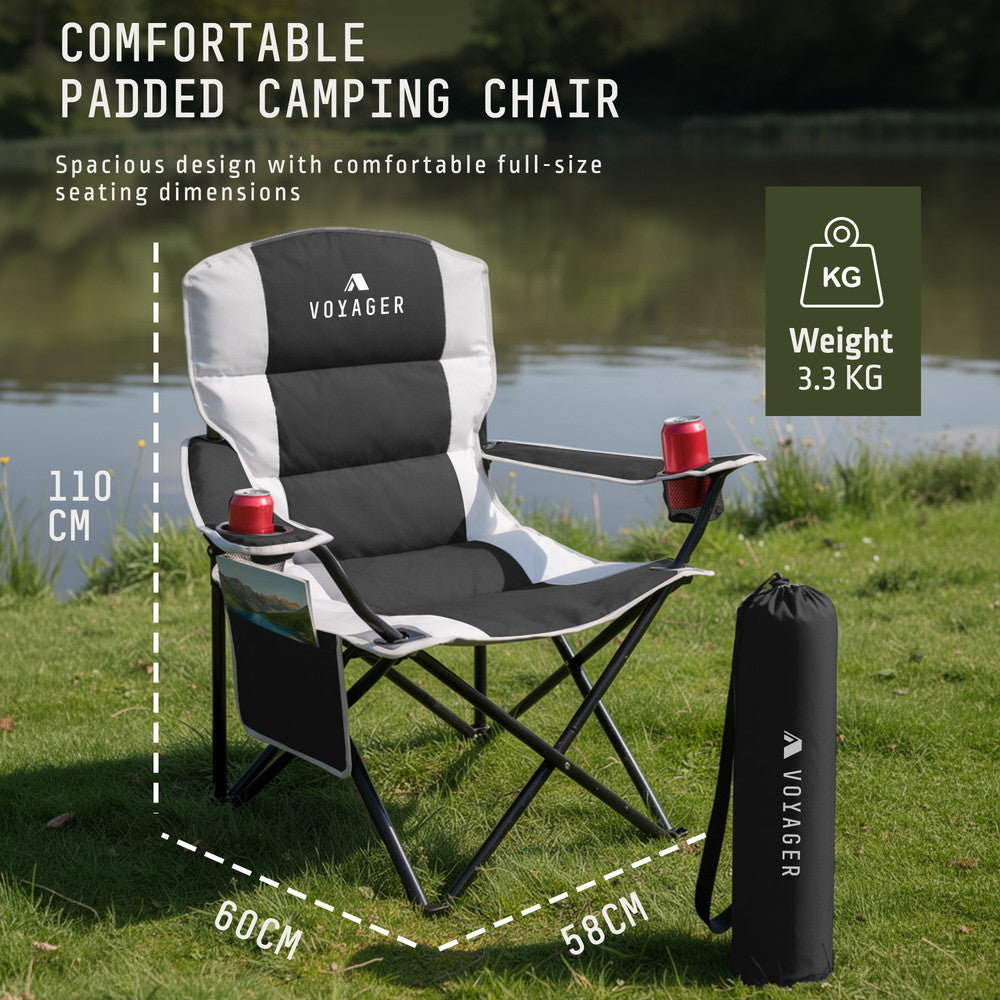
The Yorkshire coast is well set up for a few days out. If you’re staying in the area, a pair of folding camping chairs with a cooler bag will be the most-used thing in the boot. Cold drinks and somewhere to actually sit are underrated features of a good beach day.
Filey holds Blue Flag status and has solid
facilities including toilets, cafés and car parking close to the sand.
5. Tenby, Pembrokeshire, Wales

Tenby is one of the best-organised seaside destinations in the UK. It has multiple beaches within a short walk of the walled town, Blue Flag status on the main sands, full facilities and the kind of ice cream that makes adults nostalgic on the spot. It’s also one of the prettier settings on this list, with the medieval town walls providing a genuinely lovely backdrop.
North Beach is the better pick for families with young children: longer, broader and sheltered. South Beach is windier but more open. Caldey Island, reachable by boat, adds a half-day adventure if you have extra energy to spare.
The town itself handles the tourist season with more grace than many UK
resorts. There are good restaurants, sensible parking options and enough to
fill a long weekend without any repetition. If you’re setting up a base on the
sand for the day, a pop-up beach tent is worth having for when the sun gets
serious – and it includes tent pegs to keep it anchored on windy days!
Visit in June rather than August if you have any flexibility. Roughly the same weather, significantly fewer people!
What to Pack for a Family Beach Day in the UK
The British beach experience is uniquely unpredictable. Sun, cloud and rain can all happen before lunch and the wind will almost always play a trick on the day. Here’s what actually earns its place in the family bag.
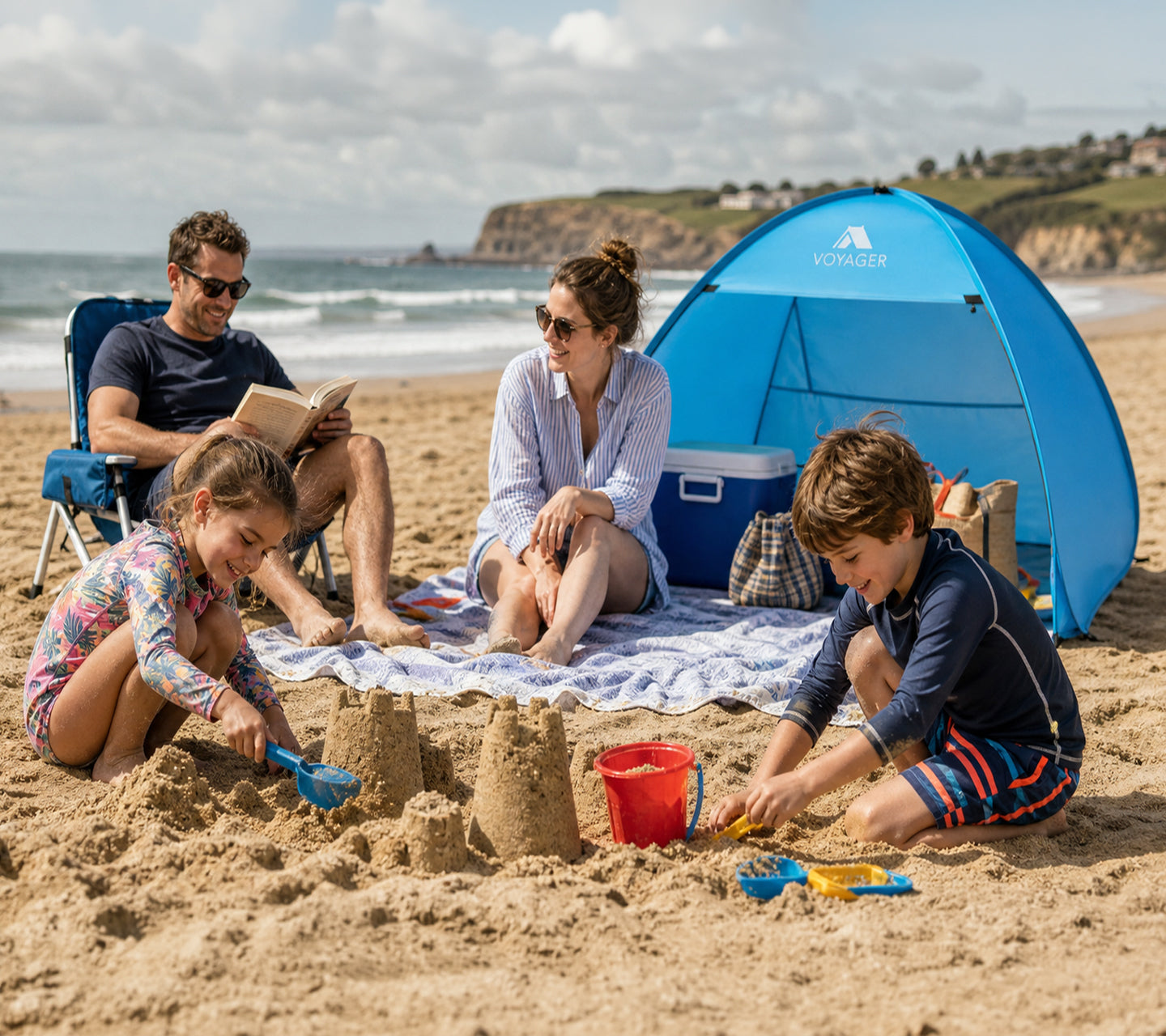
Sun protection: A beach sun shelter takes thirty seconds to pitch and means the youngest members of the group have somewhere to retreat when the UV index climbs. Look for UPF 50+ protection as a minimum, which blocks over 98% of UV rays. And plenty of sunscreen to match!
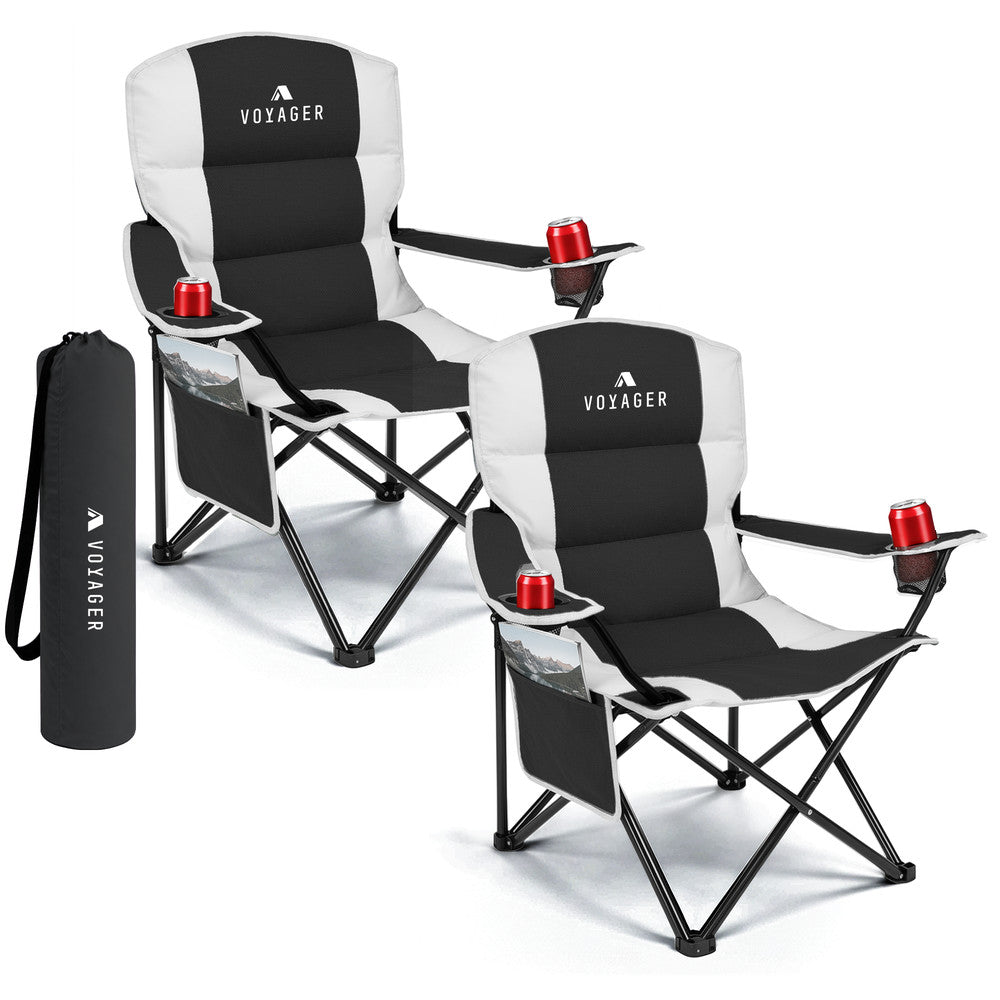
Seating (with accessories): Folding chairs are not glamorous. They are, however, better for your back than a towel and a vague optimism. A set of folding chairs with a built-in cooler bag is legitimately useful because cold drinks stay cold, even during a heatwave.
A proper base camp: If you’re going to be there all day, you need shade and somewhere to put wet things. A lightweight 2-person tent is compact enough to carry easily and makes the difference between a comfortable afternoon and a miserable one. It doubles as a windbreak and a handy landmark when the kids are heading back from the water. If you are planning an overnight stay, the camping collection has everything else you need alongside it.
Layers: Still relevant - this is the UK! A light jacket takes up almost no space and will make an appearance at some point during the day.
Snacks & Drinks: Most beaches have seaside chippies but you’ll never regret packing a few things to eat and drink for your day away.
Toys: Sand castles competitions need proper tools. Forget
them and you’re in for a long day!


